

Acceptance of reality: How religion is different from other worldviews

Updated: Feb 26, 2023
What is the deep necessity and true essence of 'faith'?
Peace is the absence of conflict in the mind and the suffering that comes out of this conflict. It exists on two pillars. The more well-understood pillar is contentment - that what one has is enough.
Desire is a conflict in the mind that what you have is different from what you need or want. Imagine obtaining an object of your desire, something that you have always wanted. It can be a material item, or an experience such as success, sex, victory, or so on. Once you get it, you're filled with happiness or a sense of satisfaction. You ascribe this happiness to the possession or the acquirement of that object. But actually, in that very instant that you get it, you are happy because you are free. You are liberated from the state of wanting something. It is this freedom from that desire, the absence of that conflict, that is the essence of satisfaction and contentment, which then leads to peace of mind.
But desires are not the enemy, even though they actually cause restlessness or suffering in the cases where it is hard to fulfill them. Some objects and experiences are so essential for survival that our strong, recurring desires for them become our primal needs. Most of our lives are built around movements away from our fears and toward our desires, whether they are small or significant.
The second, more subtle but stronger foundation for peace has everything to do with this movement. It is the feeling of security.
We live in a world of such incredible complexity that we are faced with uncertainties everywhere we turn. Some events and things are familiar, and some are new. Some are well-understood, and some are mysterious. Sometimes cause-effect relationships can be established, but some events and sequences appear totally random. The survival and evolution of our species have always been predicated on our ability to identify patterns. The existence of a pattern, even if merely only a hope or an illusion, gives us a deep sense of security in the face of uncertain experiences.
Our engagement with reality is always confined in space and time to the limits of our perceptions, such that certainties are impossible in the real world. We can never be sure of patterns identified through our subjective experiences, we can only believe them until we are proven through our own lenses of cognition that they are false. Beliefs, assumptions, and illusions are part of our human condition and are necessary to function efficiently in daily life.
Therefore, particularly when we suffer, we crave an explanation for the cause of it, so that we may accept it and avoid it in the future. Beyond theorizing and believing small scale patterns, when it is hard to understand and accept the whole of reality in its truly unpredictable, unfathomable form, humans tend to invent worldviews. And belief in the unknown through the lens of the worldview gives a feeling of security to go through life in its grand complexity.
Consider the following worldviews and beliefs -
"This is my destiny, the purpose of my life. I am born to fulfill it and I'll do it one way or the other"- Purposeful existence: This belief, apart from giving direction in life, is a source of strength to go through any experience on the path to fulfilling it, no matter how long or arduous the path. In some cases, the purpose is handed to us by culture (such as salvation in religion), and in others, it is what we make for ourselves (existentialism)
"The whole world and the way it works, are absurd. Meaning, or a lack of it, are irrelevant considerations." - Absurdism: A powerful worldview to tackle purposelessness and account for luck, serendipity, miracles, and randomness that humans have such a hard time contending, particularly if random incidents lead to suffering.
"God has made the whole world. He acts in mysterious ways. What He gives, He takes. He closes doors, but He always opens one, so I pray to Him" - Devotion to a Creator: this belief gives the strength to face pain and suffering, and be optimistic in the face of a downfall.
"Everything is scripted, pre-destined to happen." - This belief makes suffering acceptable. More importantly, happiness and success feel deserved and that is comforting.
"Everything that happens, happens for a reason." - Belief in the existence of a reason makes one extract lessons out of experiences, and retain optimism for the future in the absence of a lesson.
"What goes around, comes around" - Karma: A belief that encourages a person to do the 'good' or 'right' thing particularly when it is hard to do it, so that they can feel secure and hopeful of good consequences.
"Everything that happens in this life is due to the actions in a previous life." - Karma in Reincarnation: A belief that helps accept inequality between people in circumstances of birth, characteristic qualities, and unsolicited blessings in life.
These are examples of wide-ranging worldviews to make sense of all or huge aspects of reality (subjective experiences), not just tiny bits of it. And none is better or more true than the other. These worldviews can never be proven right or logically consistent. They are philosophical underpinnings that have adequate room for uncertainty, or more practically, it is easy to ignore events that do not fit a pattern. And humans engage with the world, and with each other, always through the lenses of their own worldviews.
“Human beings live in their myths. They only endure their realities.” ― Robert Anton Wilson
Some worldviews are so self-consistent that people who adopt them turn them into dogmas (beliefs that cannot be questioned). And dogmas are at the heart of ideologies. Ideologies become self-sustaining and harmful by not allowing the evolution of core principles or the integration of new ones, with more evidence or experience. And they survive by a confirmation bias. In fact, confirmation bias is another striking aspect of human nature that is explained by the comfort and security obtained from sustained beliefs in patterns.

Religion is a powerful worldview, a system of compounded beliefs, that addresses diverse aspects of the human condition and combines it with instructions on the way of life.
The theoretical foundations of all religions give explanations for reality. Why does the universe exist? What is time? How or why does someone have a conscious experience of life? What is death? Why do there exist cycles of birth and death, night and day, happiness and suffering? And they address another cornerstone of a human's reality - community. Why is a human not alone in the world, except in birth and death? In what ways are the people around similar or different? How is a person born? What is family? What are love and attraction?
These explanations only offer ways to grasp reality, and another significant appeal of religion that sets it apart from other purely philosophical worldviews, is its set of instructions for what to do with time. What actions align with these beliefs, or are part of them? What is the purpose of existence, and what is the way to fulfill it in the short and long terms? How should one function in groups that follow the same belief systems, and in groups that do not?
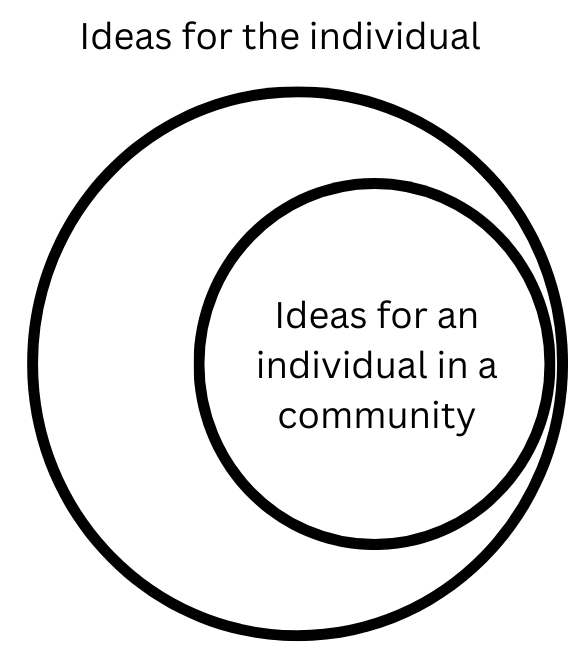
The ideas and answers that any religion provides to these questions form the threads of an underlying fabric. To an individual, it offers ways to engage with a reality that is very local and immediate. And this points to another fundamental nature of all religions because this is the way they are born and sustained. Tribes and communities repurpose the wisdom of their experiences in their own communities and local environments into stories that can be shared. A collection of stories then make up their mythology as metaphors for their traditions, beliefs, and ways of life, which are essentially timeless and representative of their living spaces. This then becomes an engine of culture that informs newer generations of the same ideas for life. The social structures in the community are preserved or slightly modified to create apt conditions for sharing stories and performing cultural and ritual activities that keep the engine running. In these ways, it establishes or strengthens the identity of that community.
Perhaps the most identifiable feature of religions is the concept of God. It is my perspective that God is an answer to the most fundamental question of existence, hence answered differently by different religions. The well-known mythologist Joseph Campbell quips, "God is a metaphor for that which transcends all levels of intellectual thought." In this sense, it is a metaphor for the layer of perception and experience that lies under the layer of thoughts, the conscious experience of the whole of reality and the natural order of things.
This still leaves the question of why these exist at all, open. Many religions entertain a belief in the existence of one or many human-like entities that created the universe. It is far easier to picture the highly complex world through a 'symbol' or an 'image' such that faith in that symbol would translate into a faith in the natural order of things (for the feeling of security). For example, a forest which is a highly complex, natural ecosystem that evolves in organic ways, can be symbolized as a forest 'spirit', that represents or created the forest. In order for humans to survive with peace of mind in a forest where they are extremely vulnerable, they require hope and faith that the forest will not kill them, something far easier to imagine and do by having faith in a 'forest spirit'.
There are other aspects of faith and worship that perhaps give these symbolic entities in various religions more human-like qualities, because the nature of such entities is representative of the culture of the people themselves. For example, it is more comforting to be able to visualize and communicate with God, which is why visual representations of God and the language and actions used to address them are very local and ethnic.
"The deity of one's worship is a function of one's own state of mind. But it is also a product of one's culture. Catholic nuns do not have visions of the Buddha, nor do Buddhist nuns have visions of Christ. Ineluctably, the image of any God beheld... will be of a local ethnic idea historically conditioned, a metaphor therefore that is transparent to transcendence." - Joseph Campbell
In summary, religion as a worldview differs from several simpler philosophical ones because it -
offers explanations for different aspects of the human condition to achieve a supreme acceptance of reality,
informs individuals who subscribe to the same worldview, on how to structure their time, whether for survival, leisure, or meaning, and coexist in communities,
provides stories and metaphors that form the engine of cultural progress over generations, and
provides symbols and imagery through which one can have faith in the natural order of the world, which offers a feeling of security to ride through life at a given moment.
And it is the combination of all of these aspects that makes it such a formidable force in the world, one that has survived for thousands of years. These aspects are present in almost all religions. It is worth noting that these are just as essential for humans all over the world at present, because these are basic tenets of the human condition. The only difference is that we are now able to gather these fruits separately from different trees. The lens of objectivity and reason has also burnt holes in the narratives and religious systems of beliefs, based on scientific evidence and progress of civilization. But there definitely exist areas of subjective experiences, particularly those of culture and traditions, that are simply beyond the realm of objectivity.
In this essay, I will restrict myself briefly to the rewards and problems for the individual, of using a worldview such as religion to accept reality.
Once it is understood that faith and religiosity offer a feeling of security, it is reasonable to expect correlations between being rich and irreligious. To be financially poor is to live on the edge, where life can go for a toss easily. As people get richer, money gives the feeling of security to go through uncertainty, that one would otherwise derive purely from faith in God (natural order of things). The privileged tend to think that poor people continue to be poor because of faith in irrational belief systems such as religion. While that is not unreasonable, it is more plausible that people in poverty are faithful and religious because they are poor.
Although it is extremely hard to evaluate a correlation between wealth and religiosity alone, because of the way wealth improves several other aspects of life, there exists some evidence to support this claim. One study by economists, performed in 2003 based on surveys conducted in 61 countries mostly in the West, revealed that with an increase in per capita GDP, religiosity decreased. In another study by social psychologists in 2021, it was found that national religiosity affects psychological well-being of people in the class of lower socio-economic status. In developed countries where the average person is less religious, poverty and lower socio-economic status cause a much heavier burden on psychological well-being, whereas in developing countries that are more religious, poverty is more bearable.
While psychological well-being may be improved, these system of beliefs that make up any worldview can be particularly dangerous when their source is not an individual's own experience. When beliefs are fed by communities, they are subject to the biases and intentions of the communities too, whether they are conscious or unconscious of it. They are powerful for the individual when augmented by personal experiences, but in other cases they may conspire to erode the sense of individuality, in a society whose ultimate weapon is conformation. This can be observed in society where religious beliefs are held as doctrine by the forces of organized religion or patriarchal structures, which silence the dissent of questioning individuals and rebellious women respectively.
Therefore, the acceptance of reality, whether it is through the worldview of religion or not, is a double-edged sword. It is both a strength and a weakness. It gives much-needed peace of mind, but in the acceptance of suffering, one may give up the agency to try and get out of it. In other words, what helps somebody accept suffering may conspire to prolong the suffering itself.
"Man is so intelligent that he feels impelled to invent theories to account for what happens in the world. Unfortunately, he is not quite intelligent enough, in most cases, to find correct explanations. So that when he acts on his theories, he behaves very often like a lunatic" - Aldous Huxley
A demonstrative example for the evidence of its strength and weakness is the Caste system in India. The untouchables and depressed classes are fed stories of their status and existence (such as having sinned in previous lives to be reborn as people in these classes) and forced to accept their reality. With acceptance of the suffering comes lesser psychological burden, because in going through typically inescapable vicious ordeals in their lives, there is no conflict in their minds that they should not be going through them. They are made to understand that this is their reality. Because with a rejection of the oppressive system and the suffering from it, come much larger penalties such as extreme trauma, ex-communication from communities, and murder.
But it can be argued that, even more than the socio-political forces that have existed through the centuries, it was their set of religious beliefs that kept them enslaved and prolonged their suffering. It took political representatives like Dr. Ambedkar, who publicly denounced the beliefs that upheld the evils of the caste system and questioned the religion and its practices, to set them on their path of emancipation and upliftment.
Another example can be found among women who bear the brunt of misogyny but soon internalize it, and in some unfortunate cases propagate it. Internalized patriarchy and misogyny are, after all, unintentional coping mechanisms. Because the belief in culturally accepted social norms offers security to go through suffering that seems inevitable, such as having to do domestic unpaid carework singlehandedly, in a culture that normalizes it.
Yet another example is more easily seen in everyday life, where some people are stuck suffering from the consequences of making 'wrong' decisions repeatedly based on superstitious ideas (which are, once again, beliefs that offer security, no matter how absurd they sound and are easily refuted by rational perspectives or evidence). These people end up hurting themselves, more often than not, due to the absence of rationality in their decision-making. But here it is necessary to raise a very important philosophical concern - if they have the grace to accept the suffering that results from their decisions, who is the authority to say they indeed live a poor quality of life? Like a comment I read by a Facebook user years ago in an unrelated setting, you cannot expect people to be rational if rationality does little to contribute to their quality of life.
This concern is the seat of other important considerations. If you are interested in the "disillusionment" of people where their core belief system is challenged 'for their own good' (which is itself a delicate, questionable judgement), it is hard to accomplish, and sometimes even dangerous for the people. Because the invalidation of a worldview leads to a sudden lack of a source of security and that is extremely shocking and disorienting, in the same way, that freedom can be very scary for someone not used to it. It is akin to removing their blindfold but pushing them into a completely dark scary world of possibilities, where reality is not so familiar anymore.
That is exactly why it is my strong opinion that disillusionment must always be :
proceeded only with the permission of the suffering party, whether they want to be freed from their suffering. And of course, the hardest problem is always to convince them that it is unnatural suffering in the first place because it is unnatural only from an outsider's perspective. More often than not, the people who want to free others from some belief system usually always have some incentives or self-serving interests. That raises ethical concerns with the whole process. Common examples are activists of ultra-rationalist ideologies, or even missionaries of a different religion.
accompanied by a new source of security. A woman freed from an accepted system of patriarchal oppression requires new security in healthy relationships so that she can learn to enjoy the freedom she is suddenly given. Minorities fleeing oppression within their own religion find it far easier to convert to another religion than to give up religion itself. The economically oppressed labourers' class are only able to give up beliefs in religion if they cling to a belief in a utopia where they deserve more compensation for the value they create.
It is all too clear where problems with religious worldviews lie. For the individual, the belief system is a self-consistent way to make sense of reality and in most cases is a huge strength rather than a weakness. But social structures such as family and society are also necessary for the survival of individuals. And coexistence in communities that share the same worldview, traditions and rituals can be extremely challenging and unfair to several individuals depending on the beliefs held. So much of an individual's actions are tied to the interests of the group also. This is where concepts of morality, moral policing, taboos and rejection from society appear.
Blind faith and irrevocable commitment to a belief system unites so many people in large groups and these groups can be very gullible, or worse, can commit inhumane acts.
"Those who can make you believe absurdities can make you commit atrocities" - Voltaire
It might appear natural that someone with a worldview has no obligation to live according to the belief systems of someone with a different worldview, but matters get extremely complicated when there are other uniting factors such as nationhood or geographical sharing of resources that demand their coexistence. Now the consequences of their actions and ways of life become externalities. The ultimate question therefore is - what is the extent to which one person has to participate in another person's beliefs?
But before a discussion on how religion informs community living, it is necessary to fully understand the spiritual values it offers individuals, and dive deeper into the nature of answers it provides for the greatest mysteries - life, death, and the purpose of living.
Stay tuned for upcoming essays on spirituality.
A few personal comments:
You might observe the feeling of security if you watch carefully yourself or other people in prayer. Several people who do not pray or are irreligious, easily lean towards something close to a prayer when they face challenges such as appearing for an exam or an interview, or when a loved one is fatally ill. Such is the power of prayer, which is an act of faith in the unknown.
Tldr for the essay would be - Beliefs strengthen the heart but weaken the mind. And we know that is a difficult choice.
We do know of the major religions of the world, but small, local religions are capable of being invented even to this day, and to my surprise even in developed countries. If you want to see spirituality give rise to ‘religion’ effortlessly, check this out: https://www.uniteplayperform.co/
They are an Australian group I randomly came across on instagram, that does spiritual practices. They have a space they call the “playground or playshop” which is intended to be a place of spiritual “healing, awareness, and play” - a striking parallel to a temple except for images or idols of God being replaced by other artistic symbols of significance laid all over the place and on the wall. They wear funky clothes and items like bead chains, bracelets and scarves, akin to familiar clothing accessories worn by people in traditional religions. They even have a strong sense of community, people who all believe in these practices, and financially and physically support them, and regularly congregate in these playshops (temples)!
This is purely just my own guess, but it would be funny if it was true: they might hate being called a religion, because of the way traditional religions might have impacted them in unfavorable ways. Or maybe they were not impacted by them at all since they have designed their own spiritual centers that “move” them in ways meaningful to them, which might not be understood by the likes of you or me, since their symbolism is rooted in several elements in their locality and environment (pebbles, beach sand, etc.). Of course they are built on the modern notions of morality - community well being, positive expressions, space for authenticity, compassion and kindness, environment-friendly practices, etc.. The spirituality, symbolism, and community activities already satisfy several aspects I mentioned about religions in general! Soon one of them might write a book on these values and morals and the significance of these symbols, traditions and activities, and boom! A 'religion' is born unlike any of the major religions.
This proves to me that religions will never really disappear as long as humans find spiritual value, and build customs and activities around these beliefs. It will simply exist in new and evolved forms.

World views , dogmas and ideologies... Very relevant topics in current day